

WARNING: Full spoilers for both Return to Silent Hill and Silent Hill 2 ahead
Spend enough time talking about video games and you will inevitably hear this gem: limitations breed creativity. To prove this, you’ll almost always hear about Silent Hill’s use of heavy dense fog to hide how little of the world is loaded in at a given moment. This trick has given the series it’s trade mark atmosphere, one of the most effective in the medium. As I sat in the theater and watched Return to Silent Hill’s meandering adaptation, I came to appreciate another compromise: It’s focus. Silent Hill and it’s sequel begin with the protagonists arrival to the foggy little town, and end with their departure. Silent Hill is about nostalgia, about how our memories fade and twists with grief and stop being places of comfort and become prisons of loss. The loss of a wife, a father, our bravery, our agency. Breaking this hold and moving forward, leaving the town where it belongs, the past. Naming the newest film Return to Silent Hill maybe have been a warning.
Return is not a good movie. Divorced from it’s source material, one of the most lauded and beloved titles in the artform of video games, it’s an aimless odd horror flick that fluctuates from moments that are more reminiscent of Doom to those that feel taken from an MTV rendition of Resident Evil. Taken in the context of its namesake, it’s borderline offensive. James Sunderland is transformed into a bar fight bad boy, closer to Leon Kennedy than the sadsack we see in Silent Hill 2, his relationship with Mary downgraded from a mundane marriage to a whirlwind romance complete with a romcom meet cute and a lunch date on a hotel roof. The cast of characters he meets in the games, all vivid enough to be characters of their own stories, are swapped out for generic horror movie standees populating an impressive, but ultimately toothless haunted house.
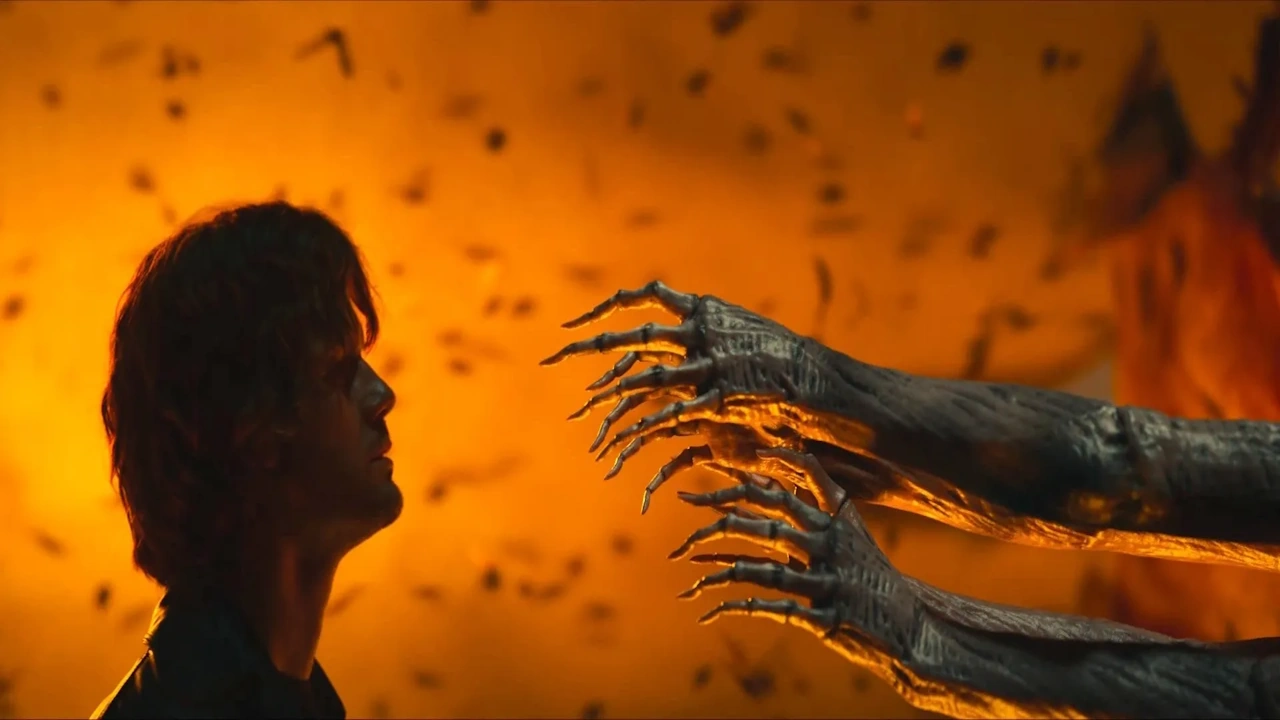
“Hot as hell in here”
Angela is the first character we meet in Silent Hill 2 after James himself. Met on the trail into the town, Angela is looking for her family, warning James that something seems wrong with the area. Angela has a homely appearance, wearing a heavy sweater compared to the more moderate clothing of the rest of the cast, appearing older than her stated age of 19. Reserved and somber, Angela’s second encounter furthers her macabre tone as we find her on the floor of an apartment, knife in hand wordlessly contemplating suicide. James, seeing this, gives some platitudes to dissuade her, to which she capitulates. James is not giving a compelling case here, but he is a man and to Angela, that carries weight. Angela, like James, is seeking a respite from her life in the comfort of her family, specifically her mother, but having failed to find it she shrinks into herself.
As Angela’s story continues it becomes clear she is a victim of sexual abuse. Represented in one of the series most gruesome figures, the “Abstract Daddy” is a writhing mass, seemingly two figures fused together into a bed frame. Angela, cowering at the feet of her “daddy,” is saved by James who kills the figure, only to be accosted by her afterward. Traumatized by what is likely years of abuse, Angela can only see James as another potential abuser, someone who only empathizes with her to lower her guard so he can take advantage of her. Of course, James is no sterling hero. Core to the narrative of Silent Hill 2 is that James himself killed his wife, suffocating her with a pillow. James’ willingness to turn to violence against the monsters of Silent Hill, and his inability to connect with Angela emotionally, are both means of foreshadowing this event.
The last we see of Angela is in the Lakeview Hotel, shortly after James is confronted with the truth of his wife’s fate. Here, James finds Angela at the base of a flaming staircase, seemingly having completed her own reflection. Angela confuses James for her mother, perhaps recognizing his altruism in saving her, and asks James if he could take away her pain by loving her. But James, mirroring her in their earlier confrontation, has lost all sense of self-worth and can’t respond. The last dialog between James and Angela is an off-hand comment from him that it’s “hot as hell in here” with Angela surprised, saying it’s always like that for her. Wordlessly, the player watches as Angela ascends the staircase into the void above, her fate sealed.
The final moments of Angela’s story are a solemn crystallization of why it stood as such a monumental story in the medium. Compared to Harry Mason, who trekked through hell and back for his daughter, James is devoid of the traits we expect from our leading heroes. Lacking in strength of mind or body, his slump posture and warbly tone give him a lost puppy quality that first-time players may find endearing. His ultimate goal, to reunite with his deceased wife, generates pathos in the player, a want to see him succeed. To this point, these initial awkward encounters with Angela are stepping stones necessary to build momentum to overcome the wall in the climax. The revelation of James’ betrayal, that he is no hero, right between the last scene with Angela is no coincidence.
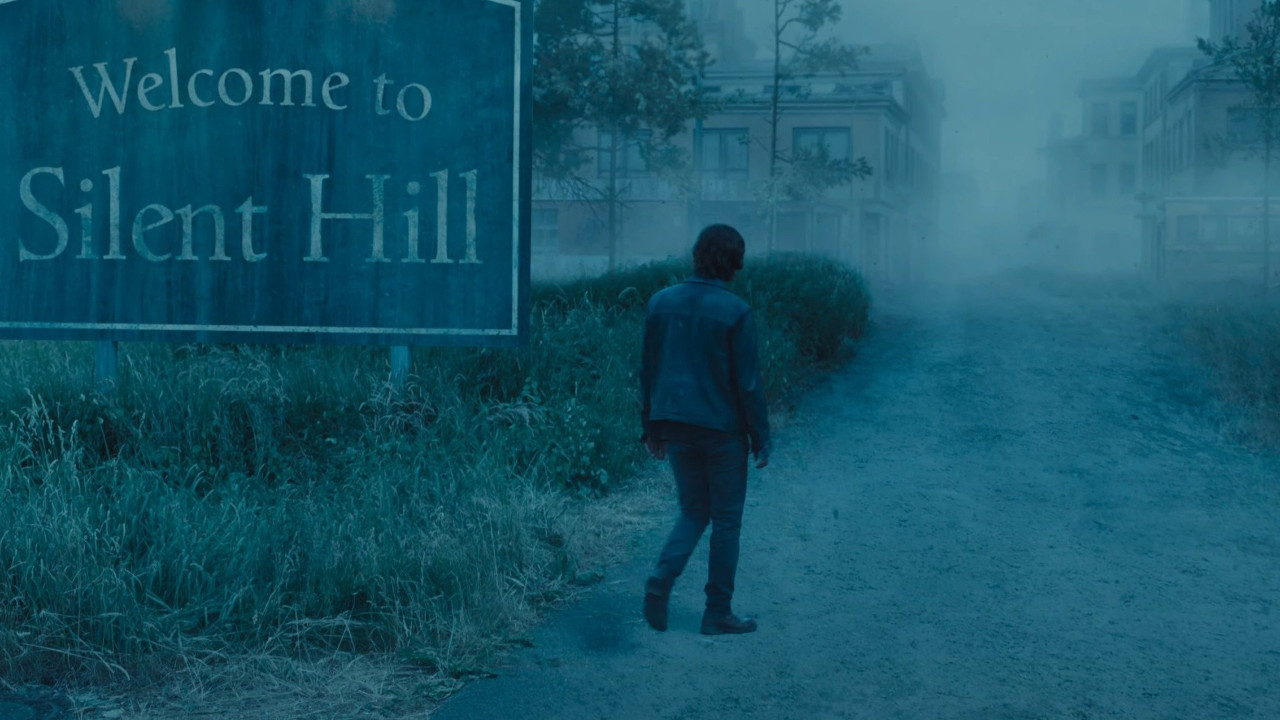
Welcome to Silent Hill.
James cannot save Angela. He could not save Eddie, and he cannot save Laura. He is no hero, no sterling figure who can pull us from the brink of self-destruction. He is a husband, disgusted by his dying wife and distraught at the pain he sees her going through everyday. For their last memories together, we only see a hodge podge of emotions too entangled to distinguish. On the part of both James and Mary, we see a push and pull, a building resentment coupled with a deepening pity. A loss of desire, the erosion of eros and its replacement with something akin to a father caring for an infant.
For Angela the conflict is inverted. The comforting warmth of a parent twisted into something ugly and violent. It isn’t impossible for Angela to make those connections, to heal from the trauma caused by her family, but it would require care and guidance that James cannot give, in part because of his gender but also his position. The rules put in place around physicians and patients are not only to protect them from abuse, it’s to give them the necessary assurance that this will not take on a romantic connotation. This distance is necessary for victims like Angela to be healed, and it takes years of learning to do it properly. Without treating that underlying trauma, killing the abstract form of her abuse is meaningless. As James hikes through Lakeview to his own conclusion, he finds the mangled forms of Angela’s father have infested in, no doubt looking for her to continue the cycle.
Angela cannot be saved by a pipe and a gun. In their final moments, James doesn’t offer any false hope or promises. Instead, he makes an earnest attempt at empathy through small talk. A simple, civil gesture that if done earlier, or under different circumstances, could have been a comfort.
Return to Silent Hill doesn’t do a very good job representing any of the original’s characters, but Angela’s transformation goes beyond thin or poor and becomes outright antithetical. No longer a girl aged by trauma uncomfortable in exposing herself, Angela is now a dilapidated crone with sunken eyes and a ratty sweater, reminiscent of the enchantress from Suicide Squad. Rather than subtly uncomfortable, she is shaky and volatile, laying her trauma bare in their second confrontation. But by far the worst change is the condensation of the story, with every major female character from the original game being condensed into one: Mary.
As part of the film’s rendition of Mary, Angela, and Laura are revealed to be aspects of her in a laughably contrived scene where James is forced to remember Mary’s full name as “Mary Angela Laura Crane.” The film doesn’t address whether there would be more or less aspects of Mary were she to have more or fewer names. Mary herself is the daughter of a high cultist and as a result is subjected to a consistent and highly sexual ritual where she is drugged and then…well, I’m not actually sure what happens. The cultists all seem to rub blood on her but I really couldn’t tell you the specifics.
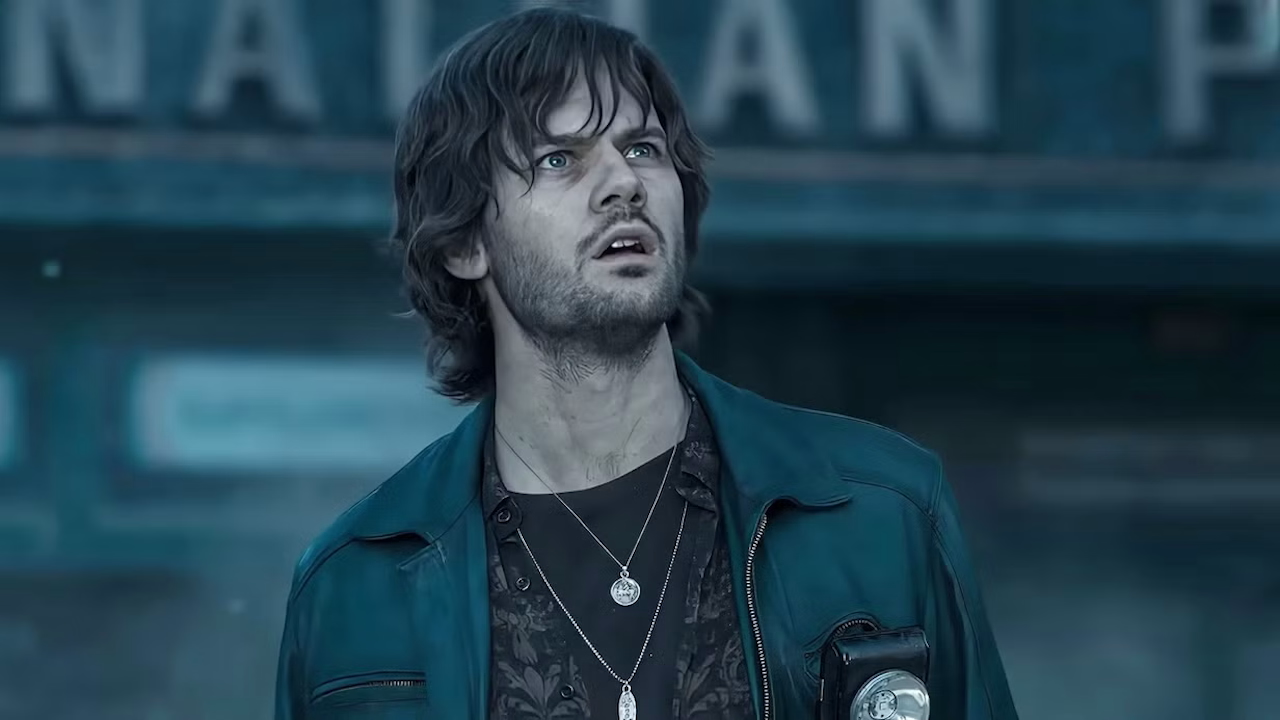
Return to Silent Hill’s best scene
This sequence does lead to the best scene in the movie, one where James demands he and Mary leave the town at once, but one where Mary can tell that James views her with disgust from the abuse. The notion of James ultimately losing his desire for Mary because he can’t see her as more than a victim is an interesting one on paper, and the confrontation let’s Hannah Emily Anderson (inheriting her role as best performer in the work from Mary’s original voice actress Monica Taylor Horgan) put forward a strong performance. But it’s hard not to feel like Jeremy Irving’s James is played too angry in these moments, failing to capture the nuance the character calls for.
In a greater way, the original game’s version of Mary, whose insecurity comes from her frailty and sickness, has a more novel quality. It’s an old cliche that if you want to make a female character feel “real” and “grounded” you make her a victim of sexual assault. Much like having a dead spouse, it instantly generates sympathy in the audience and can be a source of conflict for a romantic relationship, adding drama and a barrier to intimacy to overcome. It is also, like treatment, a very difficult thing to navigate and shouldn’t be handled by an amateur. Changing a more unique and novel motivation for one so common it’s considered cliche is a poor start, but the process also removes one of the most potent parts of Angela’s story.
The great tragedy of Angela’s story, beyond the abuse itself, is that James and the player can clock that something is wrong almost instantly. Her word choice, the way she carries herself, all of them seem to tip off that she’s a reserved person. When James meets her with a knife, he immediately clocks her as having suicide ideation. But knowing isn’t enough. Recognizing the problem and solving the cause are two very different things. The final scene, where James seems to understand Angela’s feelings, doesn’t change the outcome. In her place, we have Mary Crane, a voltron of trauma and pain, elevated to a laughable degree. Gone is the subtlety of meeting someone, of recognize and empathizing with their pain, and with that simply not being enough.
Silent Hill 2 is great in no small part because it is a tapestry. James’ story is the one we follow and the most complex, but we could just as easily be following Angela, Eddie, or Maria in our explorations, having brief encounters with a strange man muttering about his dead wife. Return to Silent Hill’s reduction of the core cast into effectively just James and Mary removes these characters, their lives and their traumas, entirely. Gone is Eddie, who mirrors his abuser to regain his lost agency. Lost is Laura, innocent and wandering through an empty town to find her lost friend. Reduced is Maria, turned from the parts of Mary lost to disease into a temptress to be struck down by James’ puppet. And, perhaps worst of all, gone is James. No longer is the shifting mass of emotions he and Mary must have felt in those final days, nearly impossible to decipher. Gone is a man who spared his wife from her suffering, who resented her because she had rebuked his desire. Gone is the man who would go to hell to see his wife again, and gone is the man who would kill his wife to get on with his life. In its place is absolution, a man who carries out an unspeakable act out of love, and nothing else.
Silent Hill is about nostalgia. It is about returning to a warm memory that has been twisted by grief and loss into a painful prison. It is about escaping that torment, and living on. In Return to Silent Hill, there is no beyond. There are no others who feel what you feel, who may come to be friends or family. There is only a lifetime of loss and heartbreak, and when it’s all done you might have a chance to do it again. To live in a prison of grief, forever.

