

The original 2D Super Meat Boy took the gaming scene by storm when it first released in 2010. For nearly two decades the world has been left in limbo about the whereabouts of the franchise. Enter German indie developers Sluggerfly, which alongside support from the original co-creator Tommy Refenes, have resurrected Meat Boy. Better yet, they have refined the fast pacing platformer formula to add a brand new 3D element to the action.
It’s particularly difficult to measure up to legacy and a game that has defined platformers. Nonetheless, Sluggerfly has largely succeeded in evolving a beloved formula and honoring the core elements that made the original so compelling.
No story? No problem
If you’re coming into Super Meat Boy 3D expecting a rich story, you’re not in the right place to begin with. Like the original, Super Meat Boy 3D treats story as a loose framework. Meat Boy is once again on a mission to rescue Bandage Girl from the clutches of the villainous Dr. Fetus, and that’s about all the motivation you need.
That said, the lack of story doesn’t particularly feel like an omission. This is a game that understands its core approach — a challenging, precision-focused platformer that features five different worlds to explore, with each including around 15 stages and boss fights, plus more if you are a completionist. To the game’s benefit, these stages are fast and furious, building on previous mechanics and throwing new obstacles to overcome.
With this in mind, narrative depth would arguably slow down the pace and distract from the core loop. Still, players looking for high stakes or world-building won’t find much here. Whether that bothers you or not depends on what you value, but for most players, the minimalist storytelling won’t detract from the overall experience.
Finding joy in suffering
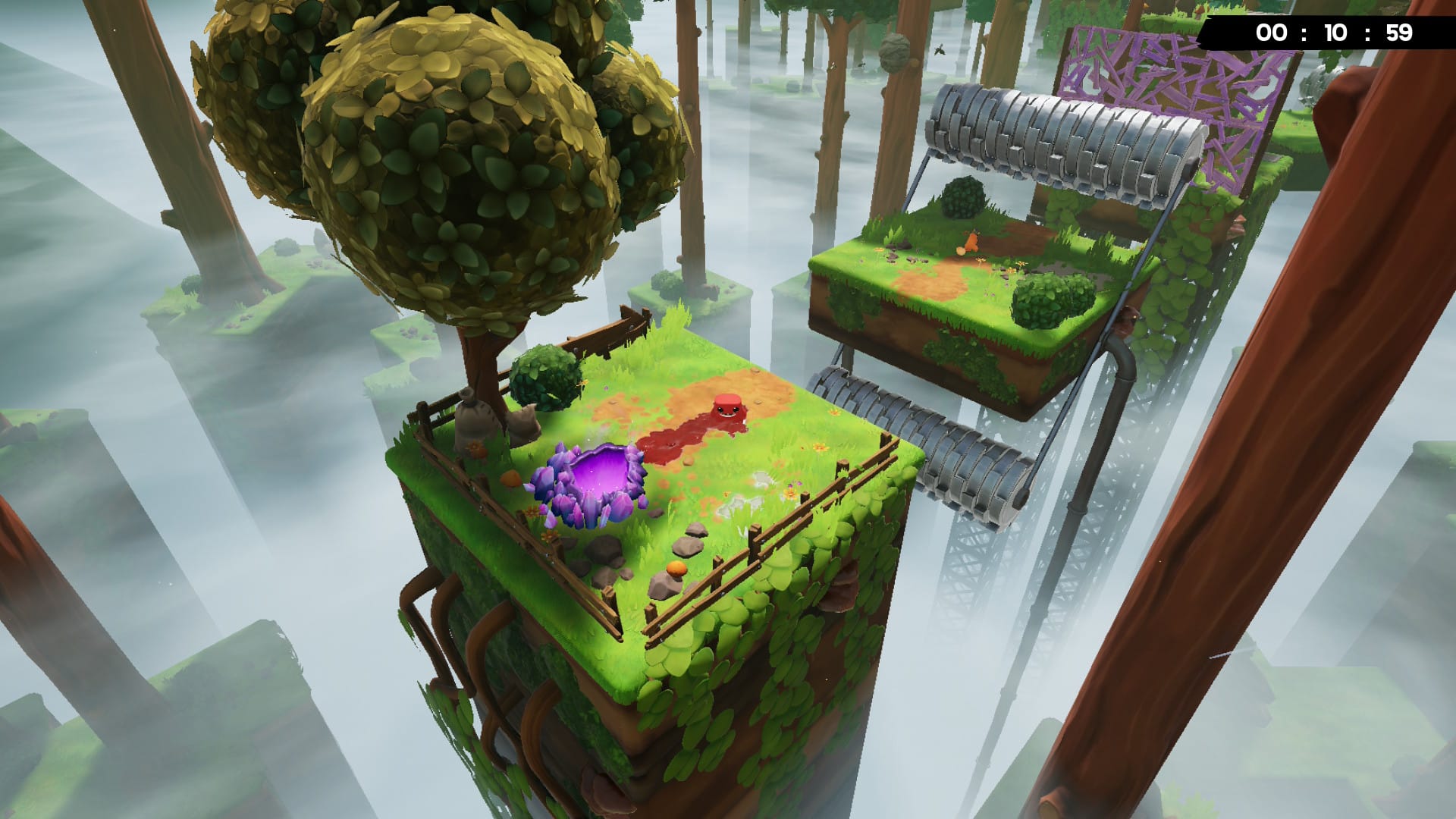
Gameplay-wise, Super Meat Boy 3D truly shines, proving it deserves to carry the legacy of the original. The change to 3D might initially sound risky for a series built on 2D precision, but it turns out to be a smart evolution. That’s because the introduction of 3D space opens up traversal in ways that are new to the series. Specifically, this now adds more depth, spatial awareness, and variety to gameplay and traversal.
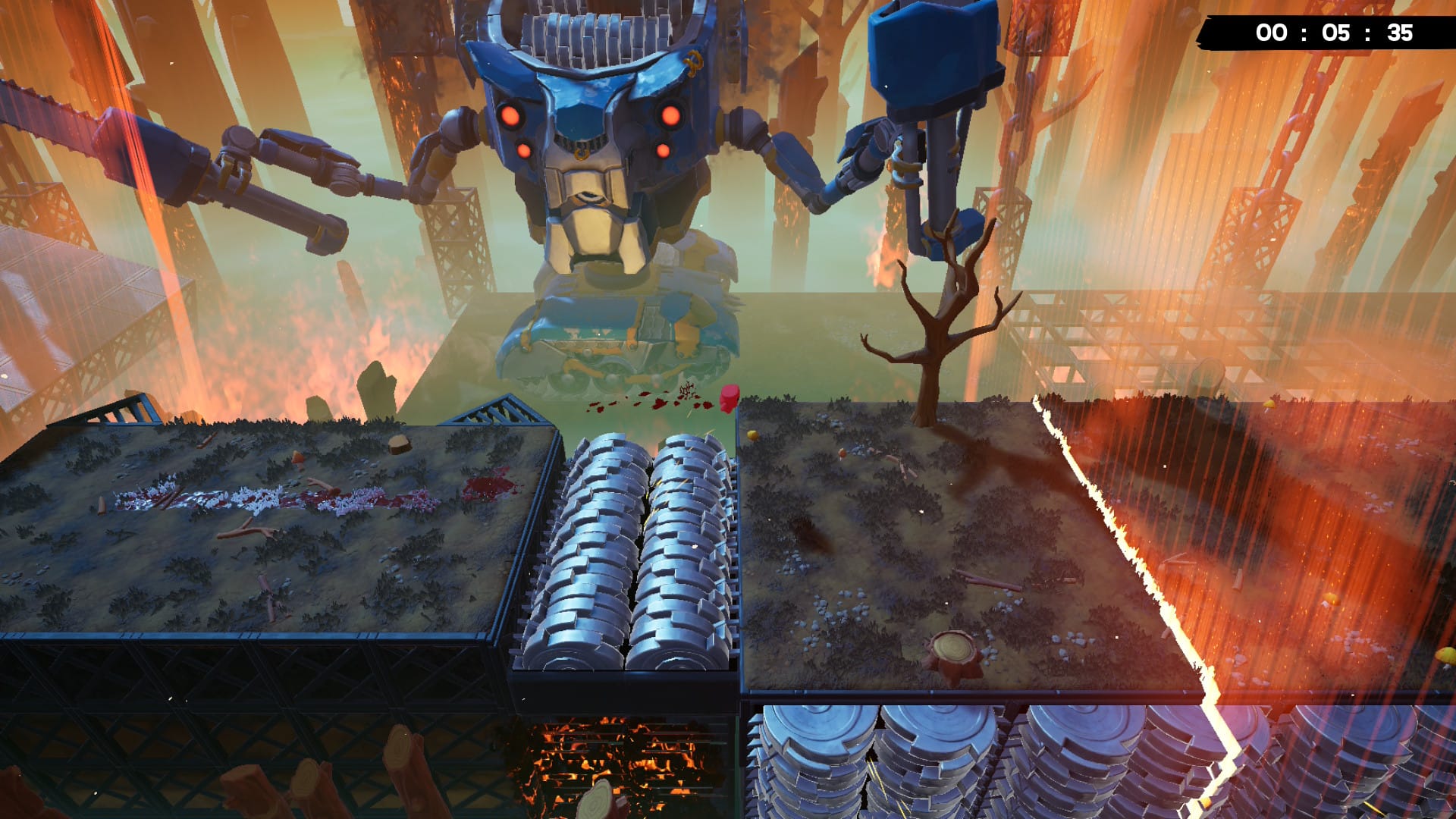
Levels are built using fixed camera angles to guide your perspective. This design choice is inspired since it prevents the chaos that a fully free 3D camera might introduce while still allowing for spatial complexity. As a result, you can approach levels in slightly different ways. For example, you might commit to one path, mess up mid-run, and suddenly find yourself improvising a new route on the fly. Better yet, you may find shortcuts for faster completion of the level. In any case, this lends itself to many edge-of-your-seat moments.
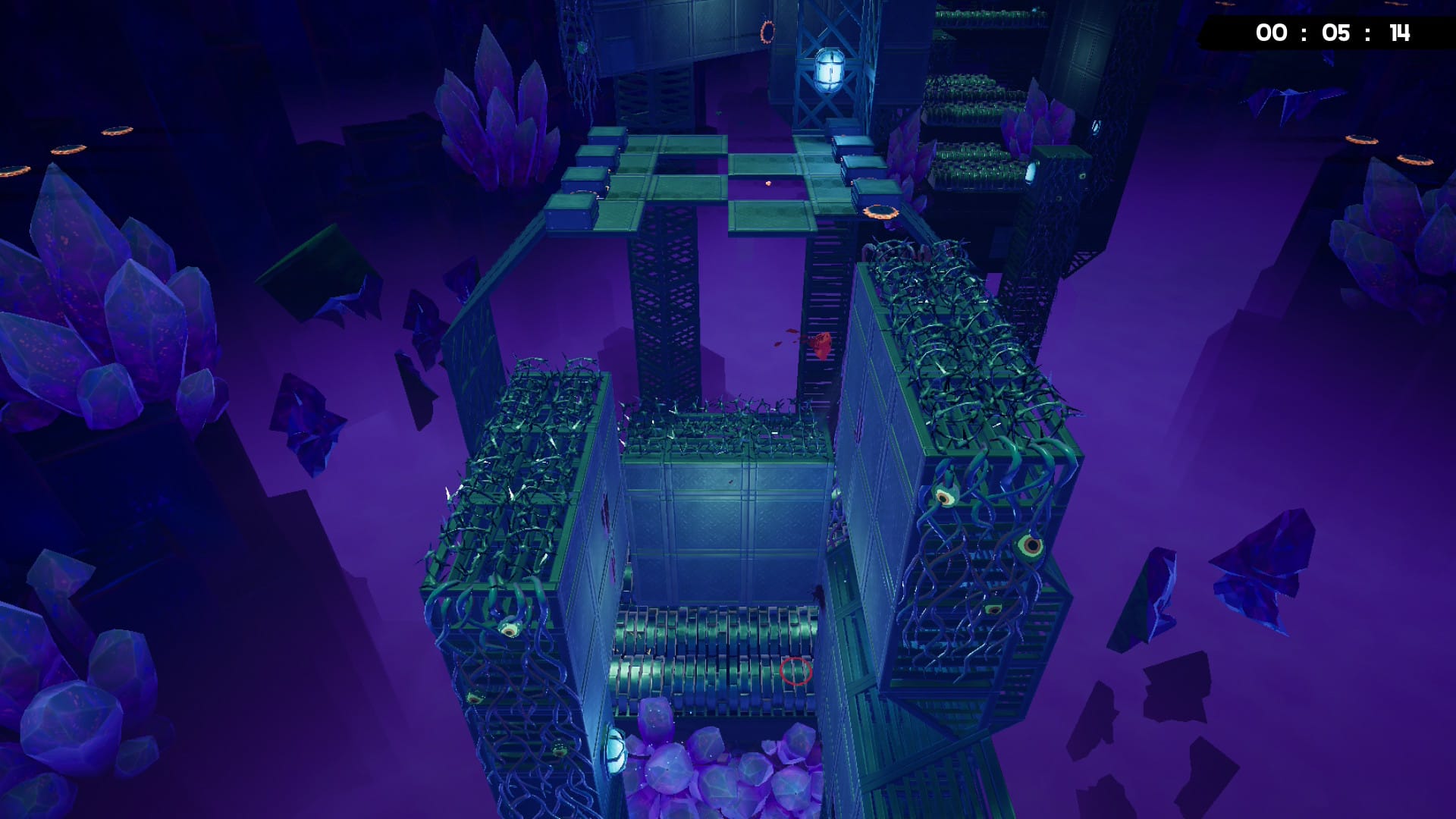
Level design is another standout. The five separate worlds plus the Dark World stages (which are basically the hardest optional stages you can unlock if you get an A+ score on a particular stage) are tightly constructed, visually distinct, and don’t overstay their welcome. They’re short enough to encourage “just one more try,” but remain memorable as these introduce new obstacles to tackle. This balance keeps the pacing fast and mitigates frustration (don’t worry, you’ll get plenty of that anyway) from turning into fatigue.
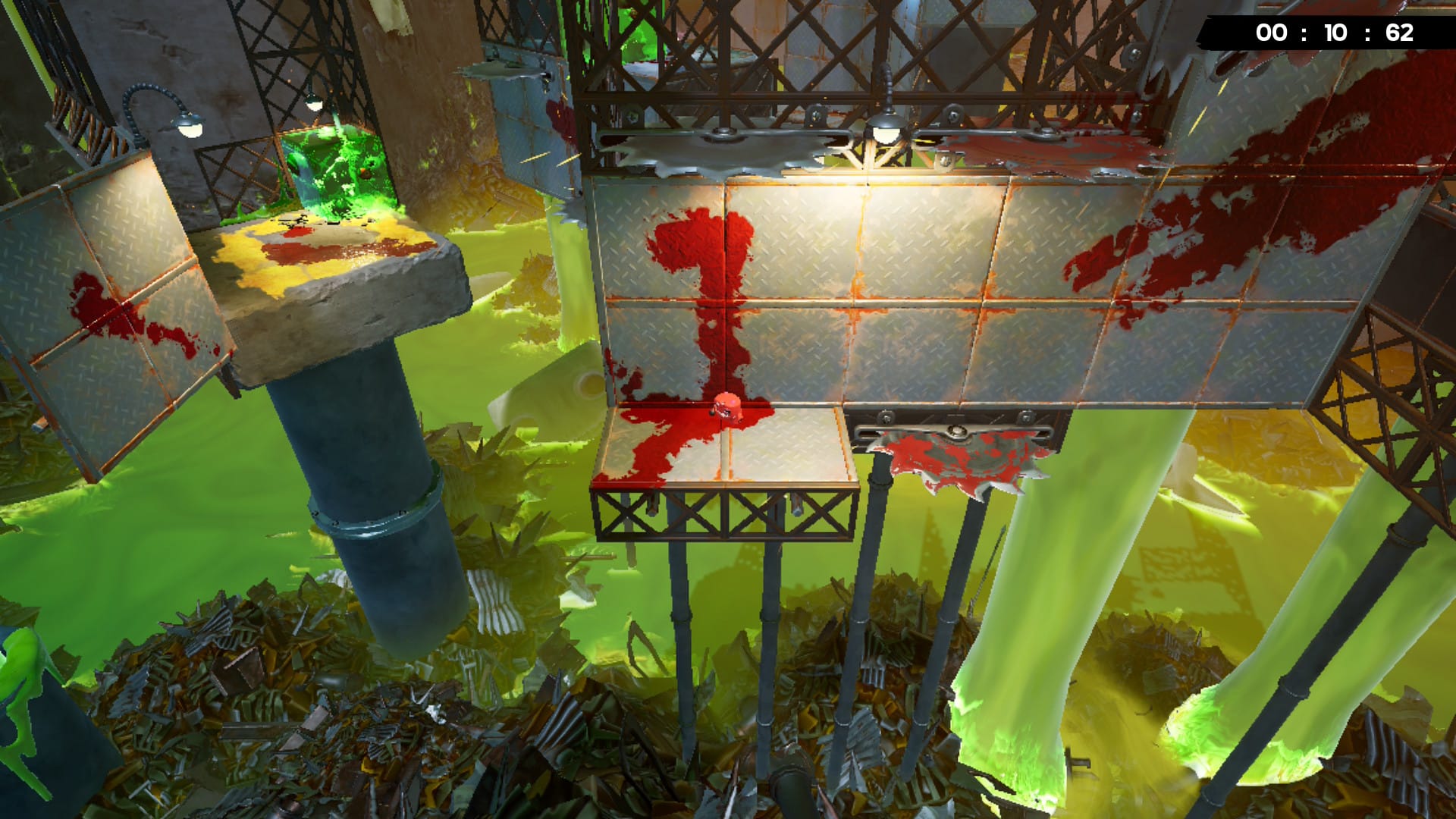
Many were worried about how a 3D Super Meat Boy would control. Fortunately, the controls are great. The movement is fast, responsive, and precise. Jumping, wall-running, and mid-air dashing feels deliberate, and when you fail (which you will, often), it’s almost always your fault. And I say almost because there still is some getting used to several 3D camera angles, and Meat Boy won’t always stick a precise landing on a platform. However, this is a risk associated with 3D platformers that Super Meat Boy 3D can’t fully overcome. Nonetheless, the majority of camera angles are well placed to mitigate this issue and a position marker has been added for this reason.
The game is tough, but fair. Deaths are quick, respawns are instant, and repetition becomes part of the learning process. For those who especially enjoy pain, the optional Dark World stages push things to another level. These stages are brutal, and your skills will be tested. Nonetheless, the normal stages are sufficiently challenging for anyone, and depending on your willingness and skill level the game can take you a dozen or so hours to complete and that is without a completionist run. The game also features a speedrun mode for those that want to push the boundaries.
I think that Super Meat Boy 3D could have added a few more elements to prolong its replayability. I would’ve liked to see more modes. For example, it would’ve been interesting to see a race mode or splitscreen local co-op stages. Additionally, diehard players would’ve benefited from online leaderboards. The game also has an overworld map that takes you from stage to stage. This can be bypassed if you want to quickly rush through stages, although I would’ve liked to see more interactions between Meat Boy and the overworld as it is pretty barren.
Razor-sharp presentation?
Technically, Super Meat Boy 3D performs well overall at launch, though it’s not without challenges. For the most part, it feels right at home on the Nintendo Switch 2. In docked mode, the game runs at a smooth 60 fps for the most part. This is essential for a game that demands such precise inputs, and when everything is running at full speed, it feels great.
However, there are occasional dips in performance. These tend to occur during more chaotic moments, particularly boss fights and sections where there’s too much happening on screen. While these drops are not constant, they are sometimes noticeable and would benefit from being addressed in future patches.
Handheld mode presents a more consistent issue. Here, the game appears to run closer to 40-50 fps, which is a noticeable shift from the fluidity of docked play. Please note, however, that the framerate specs have not yet been confirmed by the developer at the time of this review. Handheld mode is not unplayable by any means, but it does require an adjustment period, especially if you’ve been switching between docked and handheld. I hope Sluggerfly will dedicate more time to optimize the handheld experience going forward.
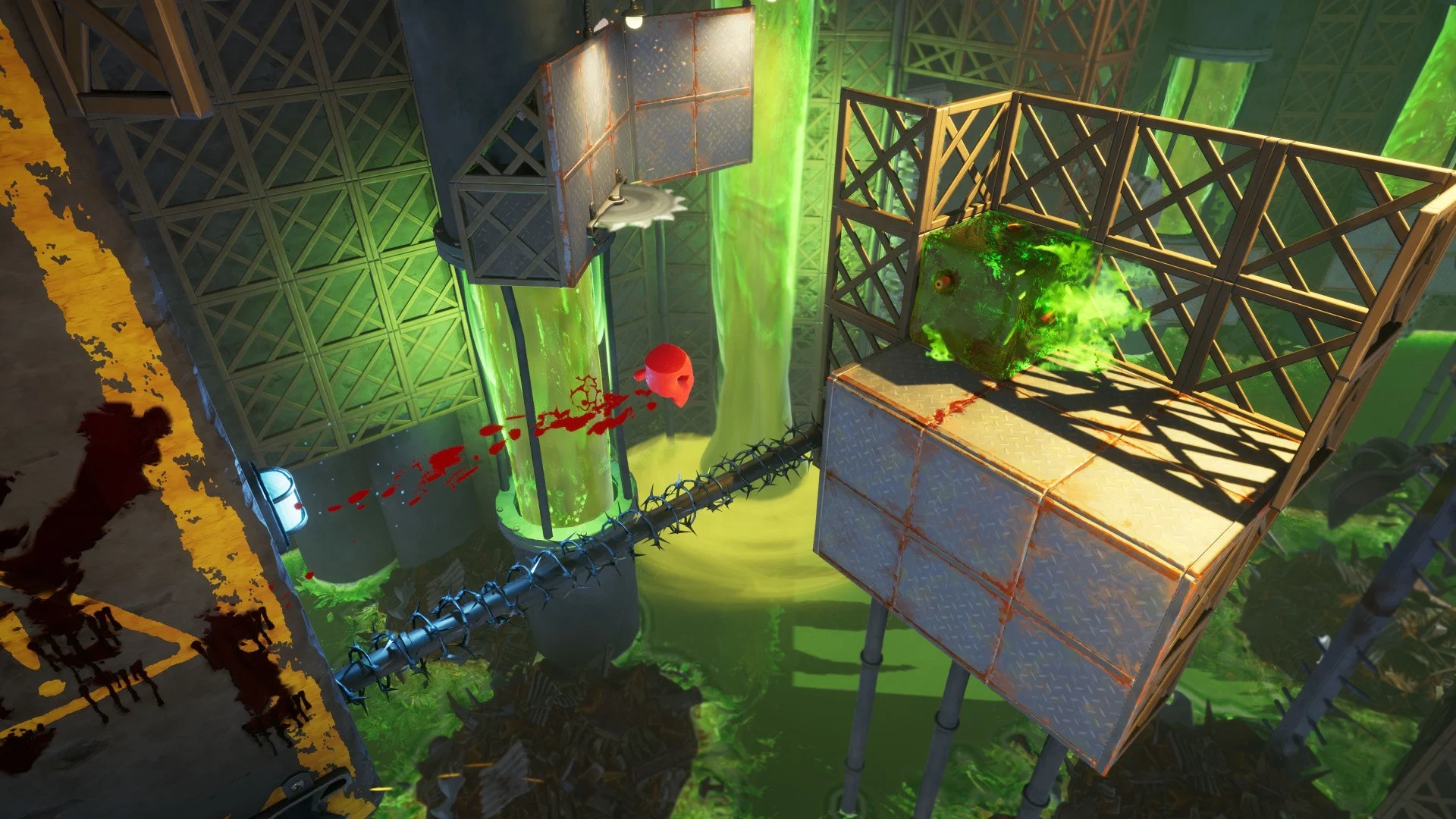
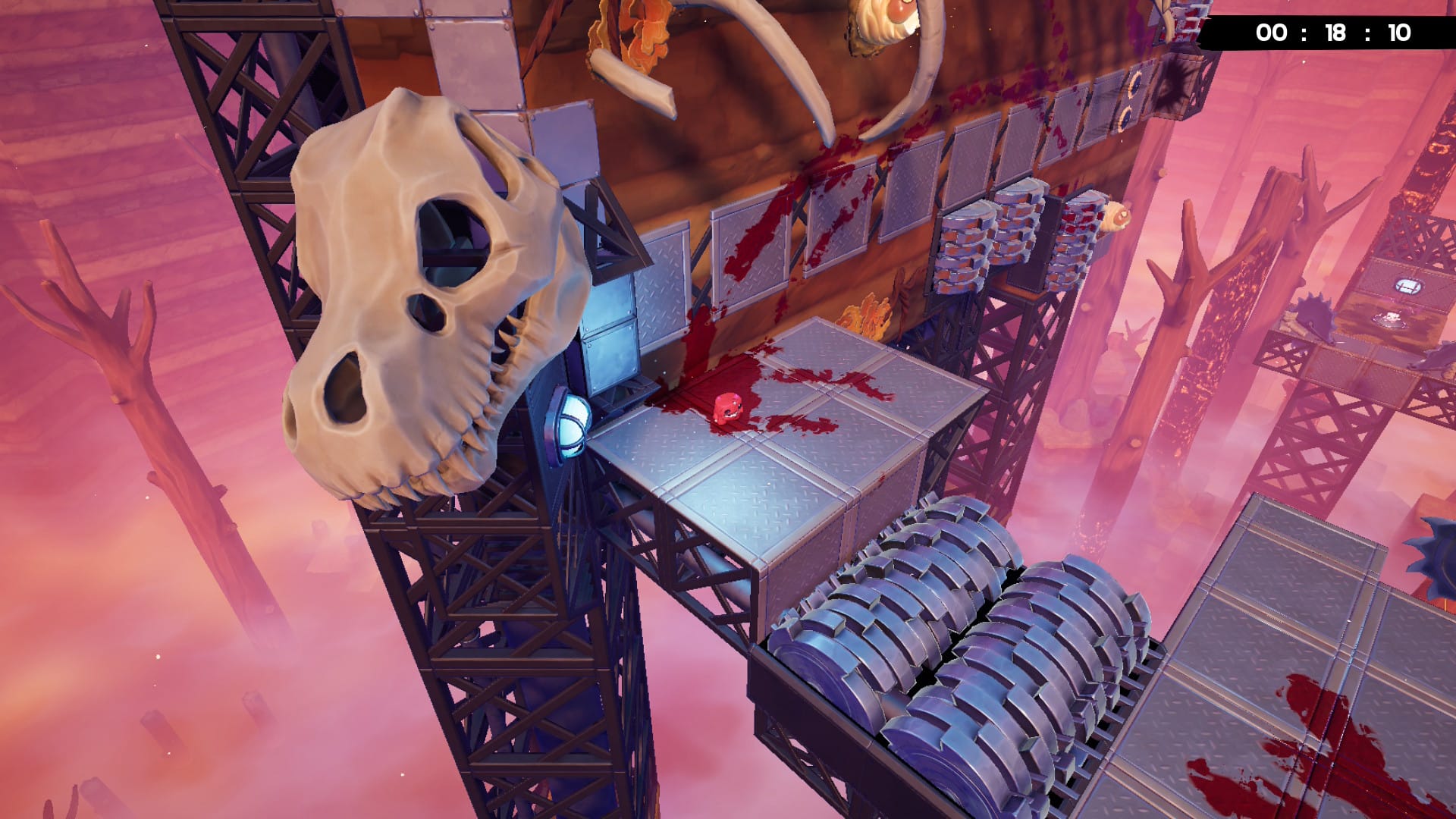
Visually, the game is a treat. The transition to 3D has allowed for more expressive environments and creative level layouts, while maintaining the series’ distinct charm. Each world feels different with new obstacles, and visual clarity is strong. Nonetheless, there is some softness to the image in handheld mode due to the game running at a lower resolution compared to docked mode. However, this has not impacted my enjoyment, and I could clearly see Meat Boy, the map, and any obstacles coming my way.
The soundtrack absolutely rocks, driven by cool guitar riffs that complement the on-screen intensity. However, it can become repetitive over extended play sessions. Hearing the same riffs loop repeatedly may start to wear thin, especially during particularly challenging sections where you’re retrying a stage dozens of times. I would’ve appreciated a bit more variety here, perhaps by including different instruments as well.
Summary
Super Meat Boy 3D is a bold and largely successful evolution of a beloved formula. It takes the core elements that made the original so compelling — tight controls, punishing difficulty, and clever level design — and translates them into 3D with great confidence. Its greatest strength lies in its identity. It’s not for everyone, and that’s also its selling point.
The controls are sharp, the level design is consistently great, and the added dimension of 3D opens up new traversal possibilities. There are some drawbacks. The lack of a meaningful story may disappoint some players, performance isn’t flawless on the Switch 2, and the handheld experience feels like it needs a bit more refining compared to docked mode. The soundtrack, while cool and energetic, could also use more variety.
Nonetheless, these drawbacks don’t overshadow what the game accomplishes — it’s a tough but fair platformer that rewards skill, patience, and persistence. For fans of the original, and for anyone who loves precision-based challenges, this is an easy recommendation.
Just be prepared to fail. A lot.
Super Meat Boy 3D launches March 31 on Nintendo Switch 2, PS5, PC, and Xbox Series X/S.