

The 2000s were a time of unbridled innovation in the games industry. Home consoles felt strong enough to develop almost any idea developers had, and a team of 20-30 people could produce a classic in a year. It was also a time of irreparable loss, as the arcade market shrunk down to nothing and the ever mythic ‘third space’ for kids and teenagers was lost. It was the best of times, it was the worst of times, and if the kings of arcades wanted to keep their crowns, they needed to shift to the home market.
The humble beat ’em up became the elegant action game, and some of the most beloved series of the industry were born out of this new wave. Devil May Cry, Ninja Gaiden, God of War, all born out of a desire to modernize the arcade loop into a more cinematic, and more sustained interaction. These series continued into the PlayStation 3 and the Xbox 360, but by the 2010s the humble action game had been usurped by the ‘soulslike,’ a style of play mimicking the titanic action RPG Dark Souls. In hindsight, this may have been inevitable rather than tragic. Just like Double Dragon and Streets of Rage didn’t stand alongside Devil May Cry and God of War, maybe those games weren’t meant to stand with Bloodborne and Black Myth: Wukong. Still, as that genre has expanded and evolved, it’s hard not to see it slowly returning to the shape of its forefathers, as if it remembers. Homura Hime remembers too.
Pink Pony Fight Club
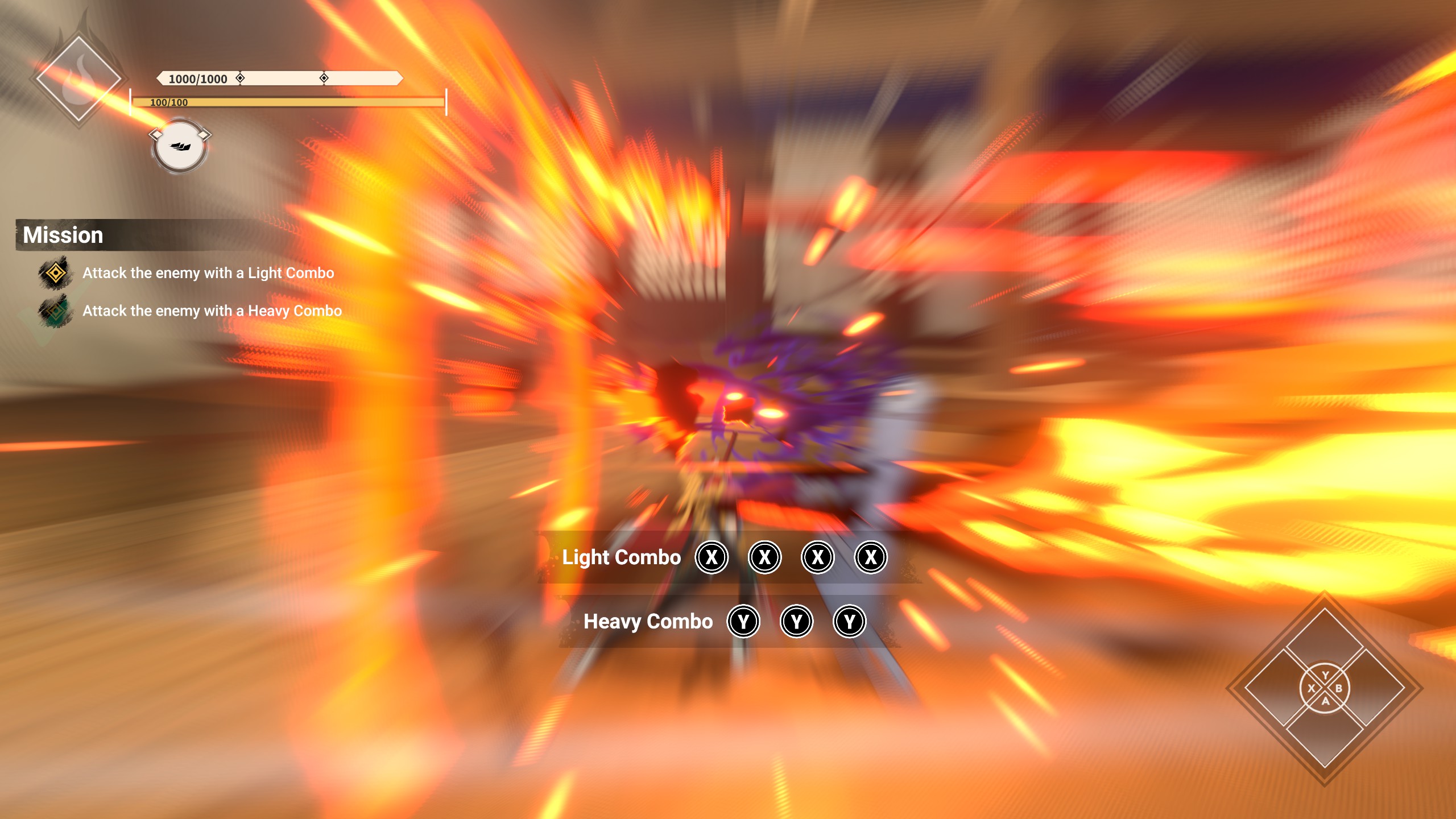
There are two distinct forms of action RPGs. There are those that are normal RPGs with more direct combat (Final Fantasy XVI) and those that are action games with a spattering of RPG systems (Kingdom Hearts). Homura Hime is the latter, so much so that its Steam tag for ‘Action RPG’ almost seems like a misnomer. Homura wears it’s influence on it’s sleeve, namely the ‘modern’ classic Nier: Automata. Similarly to that title, in Homura Hime you play as an elegant and reserved young woman and her smaller silver haired sidekick as they set off across the land hunting monsters. This is a common enough setup — arguably also describing industry darling Bayonetta — but just a few moments of play make it clear that this influence goes deep. Just like Automata, players have a dedicated button to launch a stream of bullets at the enemy, compounding the more typical mix of heavy and light sword strikes.
Yet, it’s not Nier that Homura kept bringing me back to, but Furi. Another indie debut that invoked bullet hell mechanics, Furi was a largely top-down affair, stripping melee combat down to simply dodging and parrying the enemy, Furi’s stripped down approach to design made it a refreshing experience, but one that lacked the finesse the genre demands. Likewise Homura Hime’s features stripped down cel-shading, bullet hell systems, and focus on parries, though Homura also features more traditional ‘mob’ enemies to cut through. The parry system is worth some focus, as it may be Homura’s most innovative design. As the industry has shifted toward the high risk high reward design afforded by parries, they often become the only viable tactic, promoting an overly defensive playstyle. Homura’s parry offers no counterattack nor reward. Instead, as you continue combat, enemies will flash red before using a heavy attack, and players must parry the strike or break their combo.
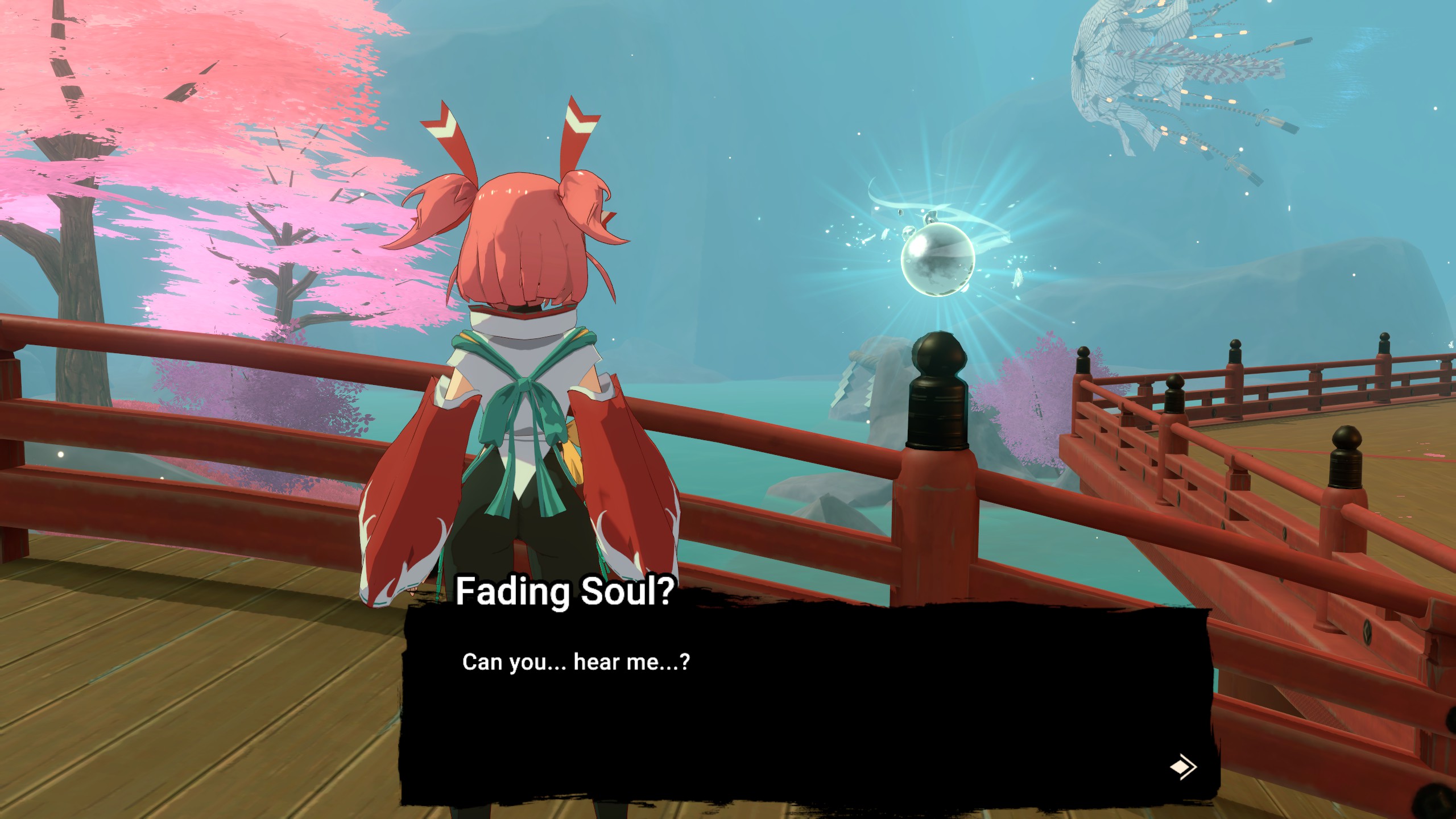
In practice it’s less of a counter and more of a wake up call, these red attacks acting like a combo breaker seen in fighters, pulling from the genre’s arcade heritage. Mixed in are golden unparryable moves that have to be dodged more traditionally. It’s an implementation taken wholesale from Metal Gear Rising, which arguable began the obsession with parry systems pervading the industry. There, ‘gold’ moves tended to denote a grapple and were fairly rare. In Homura, they’re a constant, with later bosses using both to trick the player. It’s hard not to feel outplayed when you parry a red move only to be in the crossfire of a gold almost instantly. This is where Homura Hime is at it’s best. In boss fights and challenge rooms, the frantic pace and constant weaving between strikes makes for an exhilarating dance. I’ve often described Devil May Cry’s combat like a jam band, or Final Fantasy XVI’s like a guitar solo. Homura Hime’s feels like a ballet, swaying to the whims of the maestro.
Spongecake Combat
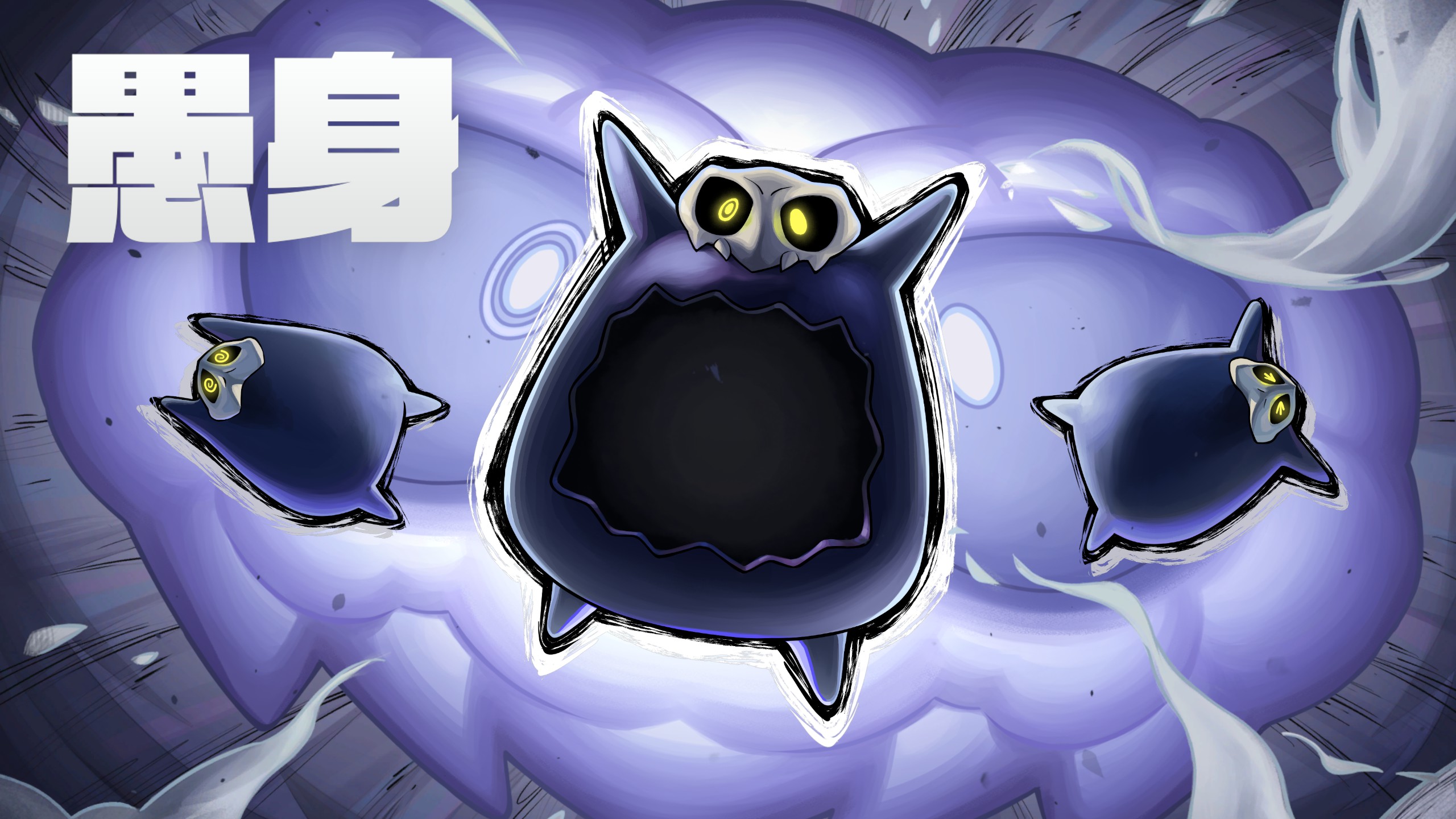
The combat is a fun system that feels a little bogged down in its own reverence. Enemies in Homura Hime are spongey, taking two or three more combos to beat than feels comfortable. Any vet of the genre would tell you these are the moments you’re meant to ‘style’ on your opponent, building up points for a dopamine rush, but Homura’s combat doesn’t allow for the same level of expression as it’s forebearers which left me feeling more bored in these moments than exhilarated. Combos in Homura Hime are basic and lack the opportunity for true stylish executions. In it’s place, Homura would have benefitted from a more Ninja Gaiden-like approach, where enemies are killed in just a few blows. Homura is halfway to this outcome, since it’s mobs can overwhelm the player just as easily as the ones in those titles.
It’s a pervasive problem. Most ‘heavy’ enemies in Homura Hime require lengthy last-minute struggles, usually involving a preset parry sequence, before they go down. Overwhelming them with equippable skills before they can begin just leads to lost resources since their health remains static in these sequences, dragging out combat. As the game continues, it’s not uncommon to encounter multiple of these enemy types in a single bout, all of which seemed to use the same cookie cutter ‘slash’ mini game for a death blow. Done more sparingly these sequences may have felt more cathartic, but in practice they just felt like a slog.
Strawberry Shortcake Sweet
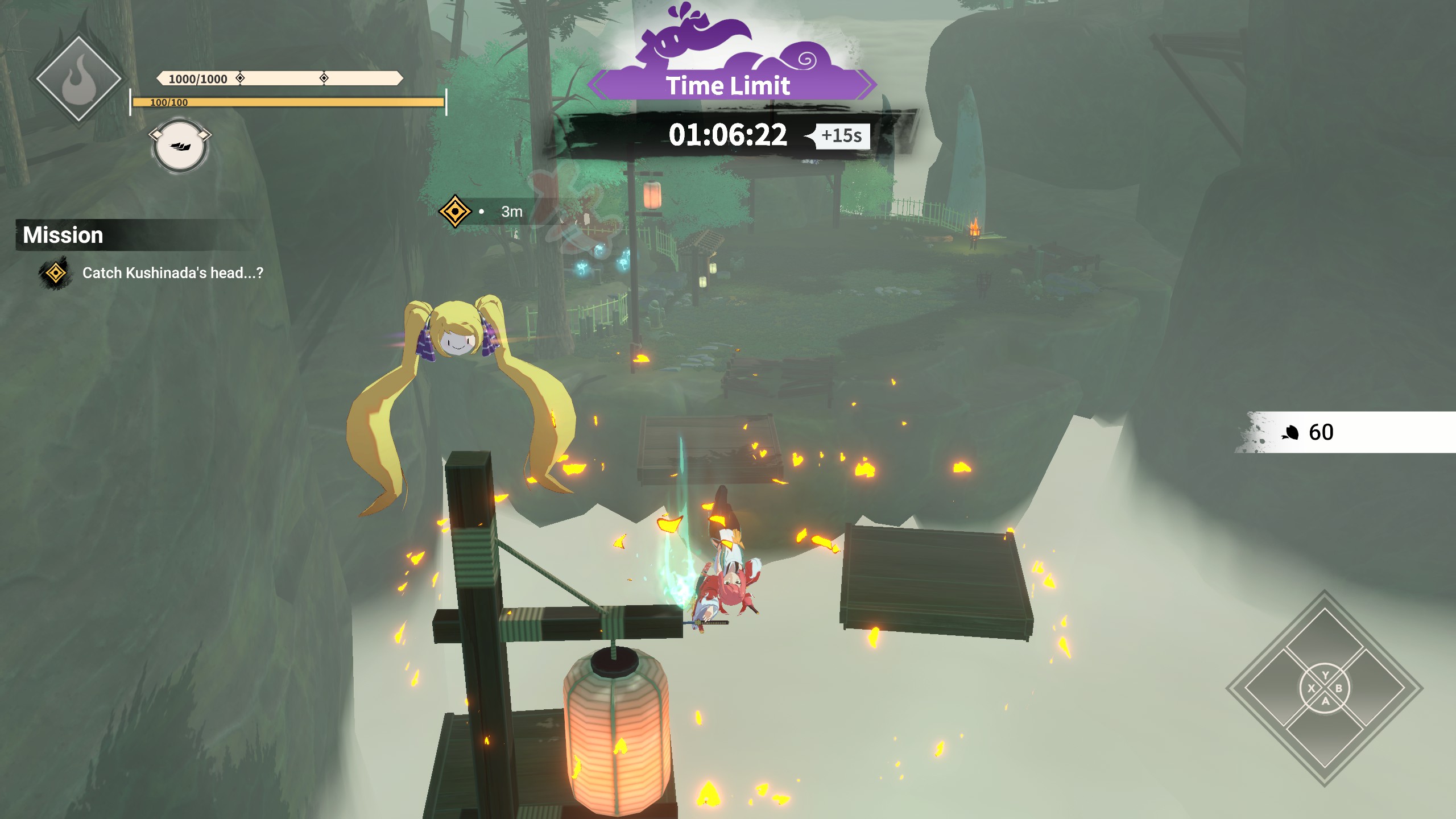
Homura Hime does have a trick up its sleeve though. It’s very charming. While its graphics and animations are nothing too impressive, it’s character art and design is appealing and cute. It took me a moment to really pinpoint what it reminded me of. My early guesses of series like Kill La Kill and Promare felt close, but the series it reminds me of the most is Shantae, more specifically the games with art by Makoto Yabe. Yabe’s vibrant cartoony style helped Shantae’s flirtatious and bright tone, and Homura’s evocation reaps similar benefits. Despite its all female cast and anime trappings, Homura Hime never feels sleazy or perverse, even for a quick joke. It is a generally sweet and cozy adventure, and while I’m in no way above perversion for its own sake, it’s nice to have a title I could so wholeheartedly recommend to a niece or a sister, especially when the pillars of the genre dress it’s leads in fetish gear most of the time.
Homura Hime is a fun game. At its best, it’s a unique and distinct blend of Ninja Gaiden and bullet hell systems that forces you to develop a rhythm and dance to it. At its worst, it tends to drag out it’s welcome and stutter under what is a fairly light load. But it has heart, and it loves a genre I love and doesn’t ask much up front. With some polish, the team at Playism has a chance to turn it into something special and distinct.
Homura Hime is out now on PC.

