

Coming into 2026, roguelites continue their dominance in the indie game world. The golden age for the genre seems to still be going strong and shows no sign of slowing down anytime in the near future. New entries need to set themselves apart, especially as the market continues to saturate. Unfinished Pixel’s Blightstone is very different than the works the team has created so far. The Barcelona-based team has put out a handful of sports-related games as well as a puzzle game. Blightstone, however, has the ambition of becoming a game that features deep meta progression alongside turn-based combat and RPG mechanics. It’s new, it’s fresh, and it’s clear there’s a love of the game driving the team at the helm.
A Blighted world
The world of Blightstone is revealed to the player in pieces as they play, but from the start, players are tasked with protecting their precious Earthglass Crystal from foes while on their adventure to face off against the demon overlord Korghul and destroy the blightstone that is spreading blight throughout the land.
It’s a dark fantasy setting that lets it tell a story effectively, learning about the world as you progress and through dialogue that may only be seen once in a run. Not only does the team use the “numerous” runs to tell their story, but they do it in a way that even character personalities make an appearance and are revealed over time. It’s an addictive formula that makes you want to continue playing.
Music-wise, the game’s score is beautiful in an almost haunting way. Piano chords play with eerie reverb during different stages of the game. And while some of the music is repetitive, it feels like it fits in the world. It’s simplistic at times, yet carries emotion. From the main menu to the sounds during combat, the music is there and is my own personal favorite thing about the game. It’s a masterclass on how to effectively use music for worldbuilding. With my personal favorite being the menu music, as I write this, I have the music in the background. It is genuinely the most enjoyable game music I’ve heard in a long time; it scratches an itch for something mellow but “deep” in meaning.
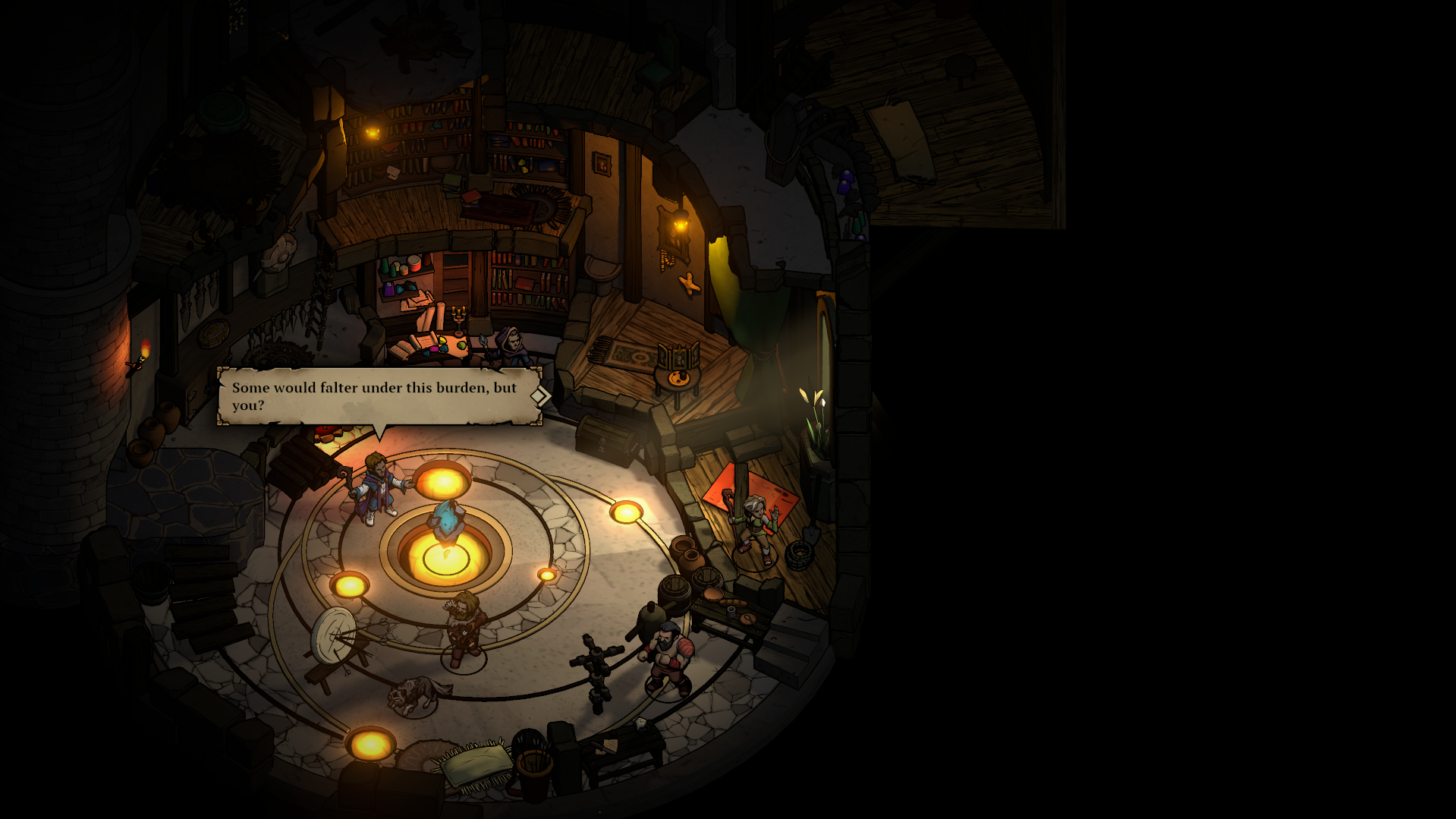
The game has a nice art style, it has similar art to what made me fall in love with indie roguelites. It feels almost cozy as a longtime player of the genre to see it, and to a degree, it reminds me of Darkest Dungeon with a twist. It retains that cozy, familiar feeling and inserts its own uniqueness, which is a delight to experience. I’ll touch on other similarities between Blightstone and Darkest Dungeon in other sections, but the art style carries the inspiration well without overdoing it.
Gameplay
The gameplay is relatively straightforward, combining XCOM-esque strategy with common roguelite features such as meta progression, gearing, and builds. Combat proceeds through the now standard branching path map with shops, events, side features such as shortcuts that give extra action points to be used at your next camp.
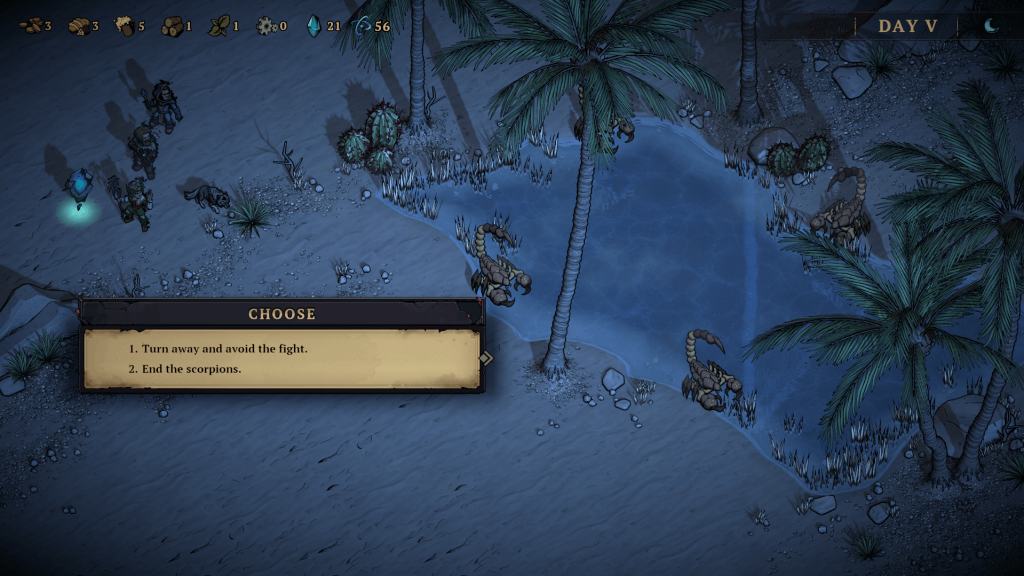
Combat is similar to a standard turn-based game, with action points for movement as well as abilities and skills. There is no speed rating that I’ve encountered; any member of the player party can act at any point during the player’s turn as long as action points allow it. Turns are taken in player-enemy-player order, with some abilities and damage able to be dealt at the beginning and end of turns. The environment is dynamic, which is unique in my experience, with things such as bushes able to be set on fire, creating a wall that applies burn debuffs to any who enter it, as well as explosive barrels that can be moved or thrown around the map.
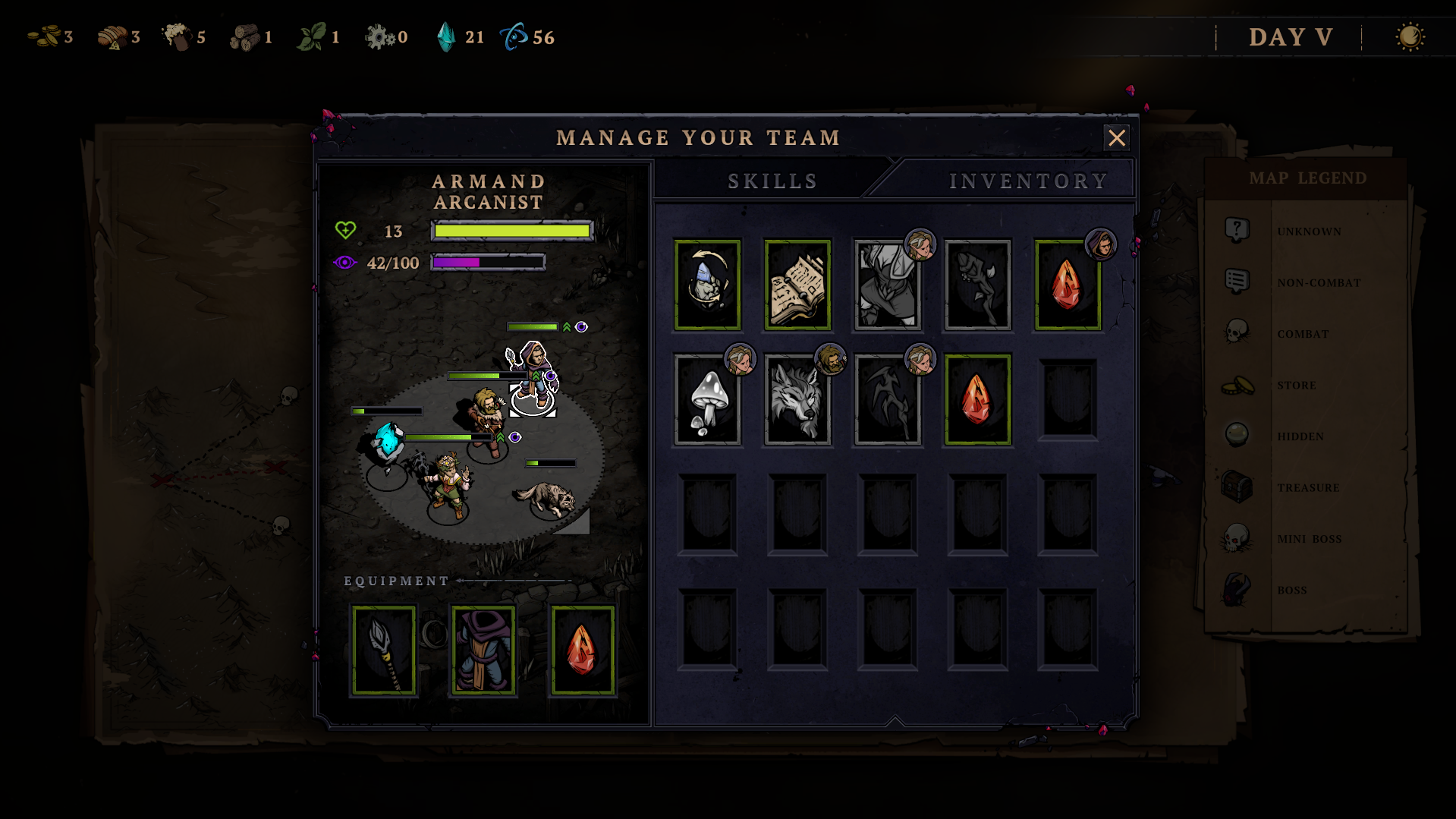
Outside of combat, you use resources that are collected over the course of a run to use camping abilities that have effects on party members, from healing to uncovering new gear or resources. Camp management is very important for late runs, as blight management becomes important.
With that said, Blightstone feels very similar to Darkest Dungeon in playstyle, especially with the use of camping abilities. It feels extremely like camping in Darkest Dungeon and the Inn in Darkest Dungeon 2. Combat-wise, there’s a good bit of uniqueness, but camping just has an extremely similar feel that I could foresee some players, especially those who dislike Darkest Dungeon, taking issue with. It’s still unique I don’t mean to discredit the game, but the inspiration feels most close there.
Technical
On the technical side of things, it’s shocking to me that this is an early access title. I’ve not come across any major bugs at all. I will say that after the first boss, the map legend does not update to reflect the icon for the next stage’s boss, even though that icon is on the map itself. There are a few balancing issues, but I feel like that’s to be expected for a new release and with everything it is doing. Some builds are just absolutely more favored than others at the time of writing. The developers seem to have a good plan going forward for introducing content, though, so I’m hopeful to see what the game can become during its early access period. I think at this point in time, especially with its lower price point, it’s a good starting place for the game.
Summary
Blightstone is fun; it’s got just enough uniqueness while retaining some of the more familiar feels that can be found in other games in the genre. It’s got a solid foundation under it while going into early access, which seems to hold the ability of extreme promise. If it can utilize its early access period well and continue the obvious passion the development team has, it could become a very big game among the roguelite community over time. More than anything, this is a game worth keeping on your radar if you are a fan of the genre.
Blightstone is out now on Steam

