

Less than a year after Danny Boyle’s 28 Years Later graced our screens with a bold, fresh, and fantastical take on the zombie apocalypse, the sequel to this ongoing horror trilogy explores the complex characters introduced last year with a surprising amount of tenderness and sincerity mixed with abject terror, sadness, and regret.
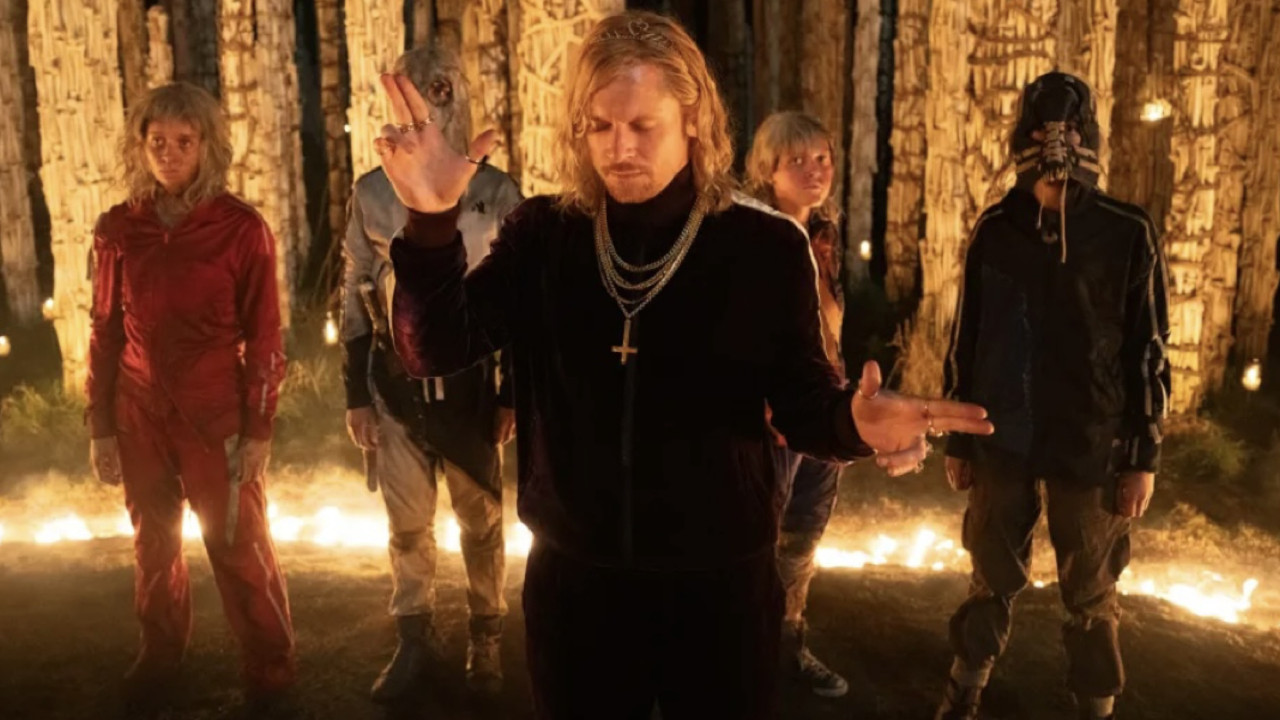
Shot back-to-back with 28 Years Later, The Bone Temple reflects that as the opening scene shows Spike being initiated into the cult of Sir Lord Jimmy Crystal into his gang of “Fingers,” which the teenager ran into at the end of the previous movie. For those familiar with Jimmy Savile, Sir Lord Jimmy styling his gang’s identity after Savile adds a particular insidiousness to his character and his cult that’s explored over the course of the story. Meanwhile, Dr. Ian Kelson continues to tend to his eponymous bone temple, as we follow his encounters with the Alpha infected he affectionately named “Samson.”
This movie is filmed in a more straightforward manner compared to its predecessor. However, with it being the second in the 28 Years Later trilogy, The Bone Temple gets right into the meat and potatoes of the story and the characters thanks to the masterful work done in the previous installment. You don’t need to have seen 28 Days Later and especially 28 Weeks Later the same way as you do 28 Years Later to enjoy this movie, but it certainly doesn’t hurt if you want to catch any potential Easter Eggs, or if you want a more in-depth understanding of the lore behind the quarantined UK portrayed on-screen.
Violence vs. pacifism
Dr. Kelson and Sir Lord Jimmy are given more of a focus this time around, with both of their respective journeys being equally riveting as they continue to be pivotal pieces in the world building in the 28 Days Later universe. Kelson continues to be the emotional core of the story, with the warm portrayal by Ralph Fiennes elevating his storyline of discovery and understanding alongside Samson. On the flip side, Jack O’Connell brings an unhinged energy to Sir Lord Jimmy Crystal, striking the perfect balance between the charismatic, jovial cult leader and the terrifying, psychopathic man-child who insists on having his way no matter the consequences.
As for Spike, he’s still involved as the audience surrogate of this world and gives us the glimpse of the Fingers gang from the perspective of a relatively better-adjusted person living in this hellish post-apocalyptic UK. Alfie Williams brings the proper amount of fear, remorse, and regret when necessary to make us care about Spike’s plight. Plus, Spike’s dynamic with fellow gang member Jimmy Ink (Erin Kellyman) brings a sense of humanity to the Fingers storyline — which can be quite brutal in its portrayal of violence to infected and survivors alike — without it coming across as overly sentimental or corny.
The prolific Alex Garland returns as screenwriter, and he and director Nia DiCosta work to build on the groundwork established previously. The dialogue flows wonderfully without it feeling stilted. That’s especially true for the various Jimmys in the Fingers gang, who could have easily fallen into narm-y territory had that level of attention not been given to their speech patterns.
The movie continues to wrestle with the theme of isolation explored earlier in the series, while also introducing the interplay of violence and faith (or lack thereof) in a compelling way that doesn’t come across as pretentious and preachy. The film can also be quite funny at moments, even as the more serious and dour events take shape over the course of the story. It doesn’t feel out of place, which helps keep the sense of immersion alive. The final scenes are executed incredibly well, helping to move the story along and feeling like a complete arc despite the knowledge a sequel is in the works for next year.
Gore Galore
Aesthetically, the movie continues to look great, with many shots looking beautiful, horrifying, and at times even awe-inspiring, even if it didn’t have the same level of experimental flair of 28 Days Later. DiCosta has a deep understanding of the characters, as she worked with Danny Boyle (director of the previous movie) to develop some of the characters during the production of its predecessor (namely Samson), and it shows in how she and cinematographer Sean Bobbitt use the space to accentuate the emotions the characters are feeling. What helps keep the movie be tonally consistent with 28 Days Later is the editing, which continues to use a more frenetic style of cuts that get the point across without it coming across as egregious or as a way to hide poorly-filmed sequences. What makes that even more impressive is editor Jake Roberts didn’t work on the last film, and he helps keep the pace of the story going — barely feeling the nearly two-hour run time.
The sound design is for the most part on point, with the gruesome scenes of kills and violence underscored by the visceral crunch of bones and tearing of flesh in particular getting the job done in making those more squeamish moments stick around in your mind long after the credits roll. There are moments when you get the tell-tale sound cue for a jump scare here and there, but it wasn’t enough to pull me out of the experience at the theater. The score was used effectively over the course of the runtime, particularly in the more emotional moments of the story as it elevates the performances and complements the tone the scene it is used in. Hildur Guðnadóttir, who also composed DiCosta’s previous movie Hedda and won the Oscar for Best Original Score for 2017’s The Joker, brings in lush strings during the movie’s pivotal and affect scenes without overwhelming the vibe. And it wouldn’t be an installment in the 28 Days Later franchise without the phenomenal use of licensed music to help boost the excitement of the various set pieces which bind these films together. Iron Maiden’s “The Number of the Beast” in particular is used in an incredible set piece, with the sequence standing out as arguable the most memorable moment of the movie.
Overall, 28 Years Later: The Bone Temple is a fantastic entry in the zombie franchise that revived the horror concept over two decades ago, and leaves you wanting more in a good way. In a sub-genre where it seems like we’ve seen all that there is to offer, The Bone Temple offers a new perspective in the post-apocalyptic zombie sphere with equal parts empathy and brutality that harken back to the first movie in the series. The conclusion to this solid trilogy in this franchise cannot come soon enough.
28 Years Later: The Bone Temple is in theaters now.

